
Property Types We Roof
Restaurant Roofing in Pasadena, TX
The most active part of a restaurant roof is the part nobody sees: a hood fan pushing hot, greasy air out of the kitchen, a makeup air unit pulling the replacement air in, and a grease trap vent that has been dripping onto the same patch of membrane since opening day. The roof works harder than the dining room does, and it starts to fail where the kitchen touches it.
In Pasadena, TX, restaurants sit in retail strips and on freestanding sites across the city, and the Kemah Boardwalk, where Hurricane Ike's surge heavily damaged restaurants and rides in 2008, shows what bay-side exposure can do to a kitchen building. A restaurant reroof has to work around service hours, grease and fire rules at once.
Trace the Grease Path From Hood to Membrane
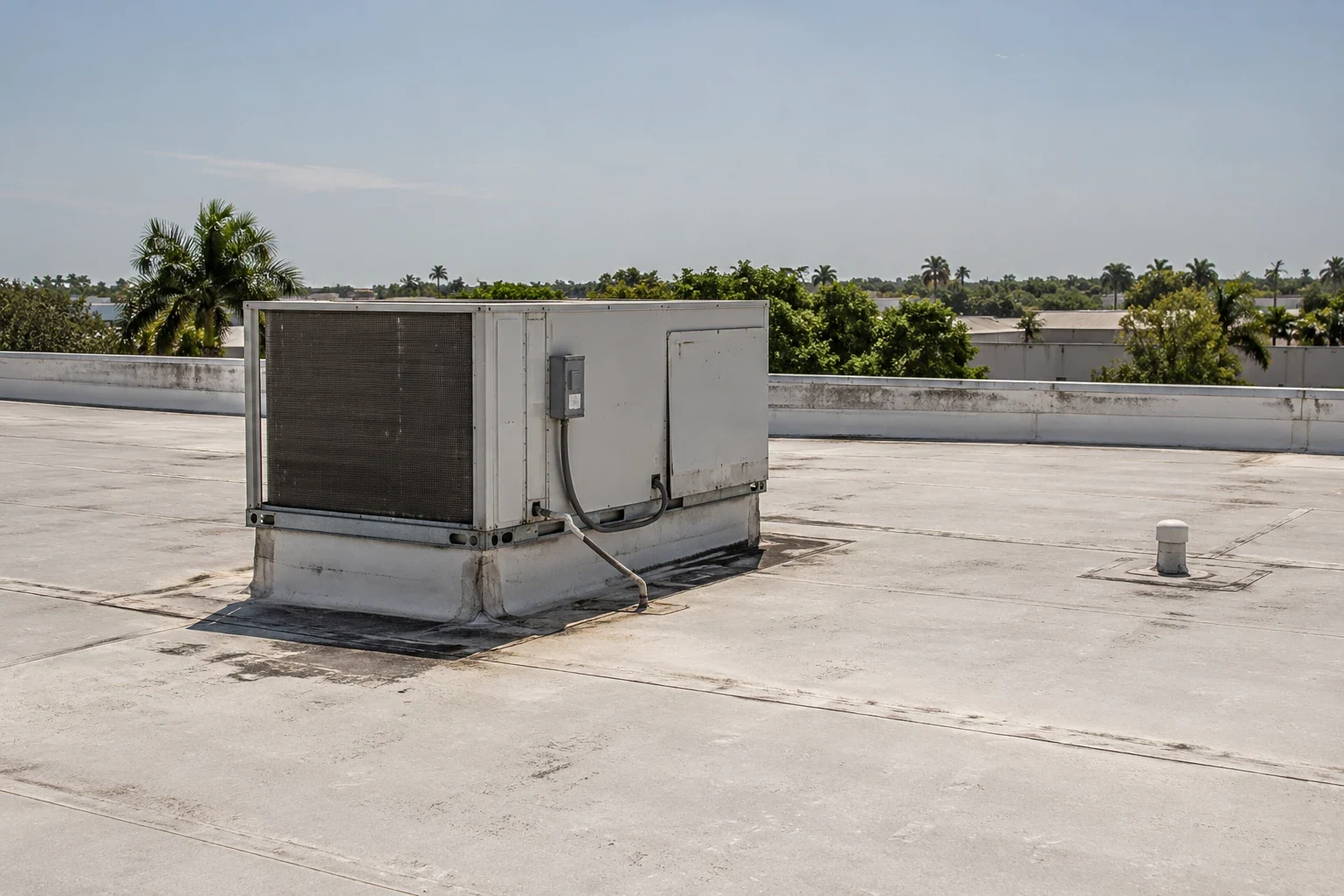
Kitchen exhaust leaves a signature on a roof. We look for the dark stain downwind of a fan, the slick sheet around a vent, the swollen seam beside a grease trap line and the rusting curb under a hood. Fats and oils soften many membranes, loosen sealants and break down adhesives, so a spot that has taken grease for years is rarely worth a patch.
On repair work, we cut out the contaminated sheet and replace it with a clean section, and we fit a grease containment pan or a drip tray where the fan has been spilling. On a replacement, we choose a membrane that tolerates oils near the exhaust and flash every fan curb as a high-risk detail. A rooftop kitchen exhaust should not discharge onto a bare roof. It should land in a pan or on a protected pad with a service path nearby.
Roof drains near the kitchen get a closer look too, because grease and food waste clog them faster than leaves do.
Work Around the Lunch Rush and the Dinner Service
Every restaurant has a rhythm. Prep begins hours before opening, lunch and dinner are the pressure points, and cleaning runs after close. The roof work goes into the quiet hours between those peaks, and any step that changes the kitchen air or the noise level gets scheduled with the chef or manager.
Loud tear-off and crane picks move to mornings before the staff arrives or the hours after close. Exhaust fans are shut off for a defined period, and the hood contractor and the fire-suppression company are told when. Delivery windows matter too, whether the restaurant is a standalone or a kitchen inside a hotel: a produce truck at the back door should not meet a lift truck in the same spot. We stage material away from the loading door, and a spotter watches the rear service lane.
For a restaurant in a strip shopping center, the landlord is part of the plan, since the membrane often belongs to the center and the fans to the tenant. We bring both to the table early, and the same goes for a restaurant chain whose corporate team signs off on each site.
Control Flame, Fumes and Fire Watch Around an Active Kitchen
A restaurant concentrates ignition sources: gas lines, fryers, a hood full of grease and an exhaust duct that can carry fire to the roof. Roofing work that adds heat or flame to that picture needs its own controls.
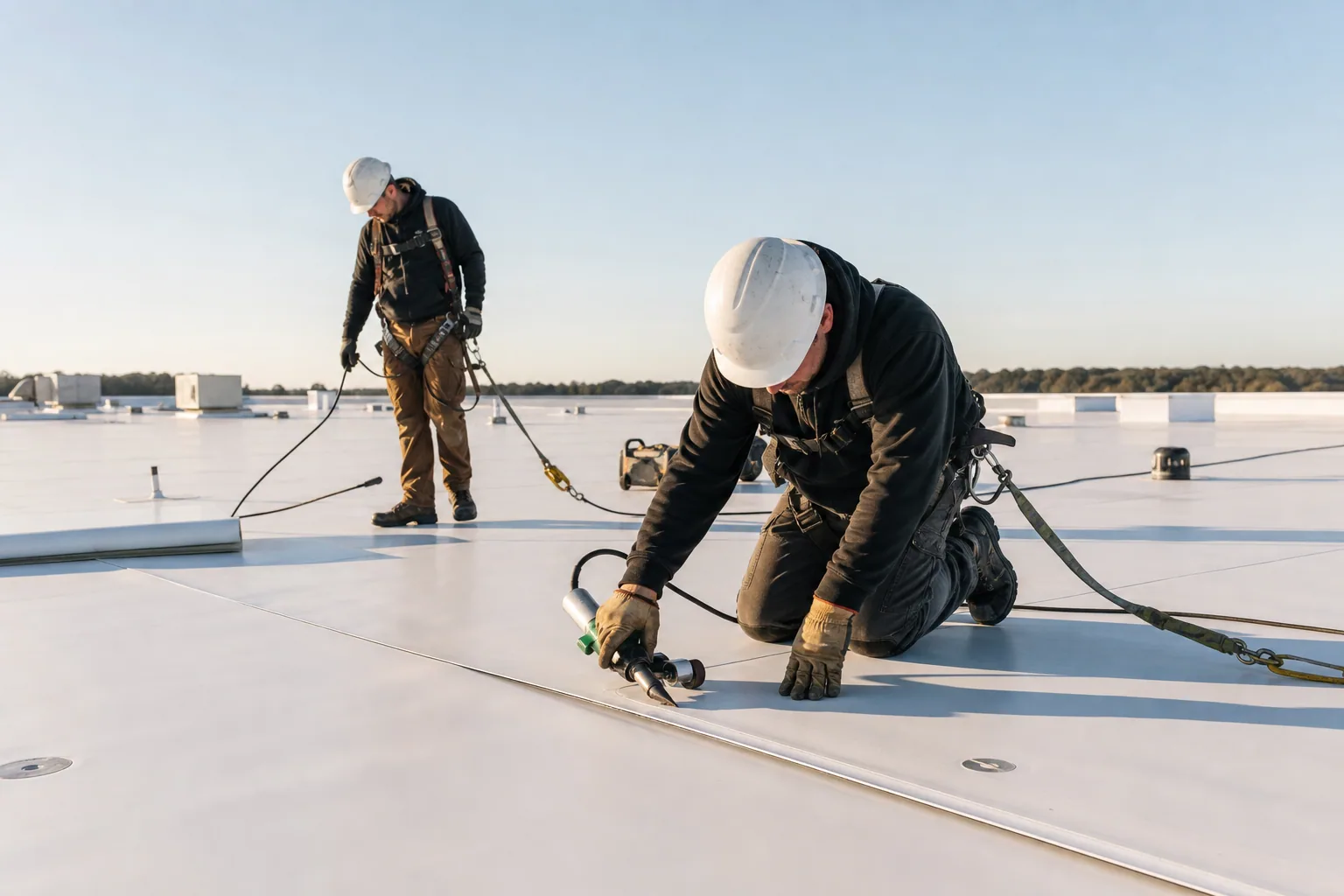
Pasadena's City Council adopted the 2024 International Fire Code, effective January 19, 2026, along with the NFPA 101 Life Safety Code. The fire code treats hot work as a permit item, and the restaurant's insurer will want to see how it was handled. We use heat-welded and cold-applied membranes wherever possible, secure a hot work permit before any heat tool is lit, and keep a fire watch on site after the last flame. Gas and fuel lines are marked before work begins, and an extinguisher stays within reach of every crew.
Fumes get the same attention as flame. Intake louvers on makeup air units are shielded during adhesive steps so odors do not drift into the dining room.
Choose a Membrane That Survives Oil, Heat and Standing Water
Not every roofing sheet likes a restaurant. Some thermoplastic membranes absorb oils and become brittle. The better fits are KEE roofing, which resists fats and oils, and PVC roofing, which handles chemical exposure and offers heat-welded seams. A good detail at each fan curb matters as much as the sheet.
Heat is the second issue. Summer in the Houston area includes about 102 days a year at or above 90 F, and the roof absorbs further heat from kitchen exhaust on top of that. Reflective surfaces cut the load on the cooling plant, but they also show grease stains faster, so cleaning plans belong in the specification.
Water is the third. Houston gets roughly 50 inches of rain a year, and a flat restaurant roof with a clogged drain can pond fast. We keep the drains clear, set slope around the units, and check flashing on every penetration. Where a joint has already let go, flashing failure repair comes before anything cosmetic, so the first heavy shower does not find the weak spot.
Plan for Bay Air, Surge Exposure and Hurricane Wind
Restaurants on the bay carry that risk directly. Hurricane Ike's surge in 2008 did heavy damage to restaurants and rides on the Kemah Boardwalk, and in Seabrook, where about 75 percent of the area is water and the waterfront has marinas and fish markets, residents spent as long as a month without power and water. A roof on that shore sees humidity, wind and blown spray together.
Pasadena sits at about 30 feet above sea level between the Ship Channel and Galveston Bay, and the windstorm insurance zone begins east of SH 146. Staying insurable there means a state inspection of the finished roof, so attachment, edge metal and flashing are photographed before they are covered.
After a storm, every day of closure costs a restaurant its sales. Commercial roof leak repair aimed at the kitchen and dining room first gets the doors reopened sooner.
Commercial Roofing Questions
How long can a restaurant stay closed for a reroof?
Often it does not close at all. Roofing can run overhead with noisy and odorous steps moved to off-hours, and the kitchen shuts down only for brief exhaust or gas coordination. A rainy week can add days to the sequence, but the plan is built so service resumes at the usual time each morning.
Why does grease damage a roof so quickly?
Fats and oils soften many membranes and attack adhesives and sealants. A fan that spills onto the roof for months leaves swollen seams and brittle sheet beneath the stain. Containment pans, oil-resistant membrane at the fan curbs and regular cleaning slow that damage.
Do I need a permit and a fire watch for roofing over a kitchen?
A hot work permit and a fire watch are standard whenever heat tools are used near a building with an active kitchen. The city has adopted the 2024 International Fire Code, and your insurer may ask for the permit paperwork. We handle the permit steps with the manager and keep the records in the closeout file.
Can I repair a leak over the dining room myself with sealant?
Sealant over a failed seam or flashing buys a short delay, not a repair. The water often enters upslope of the stain, so a fresh bead lands in the wrong place. A tech who traces the path, dries the insulation and repairs the actual defect gives a longer-lasting fix.
What changes if the restaurant leases space in a strip center?
Usually the landlord owns the roof, the tenant owns the fan and curb, and the lease sets who pays for what. We coordinate with both: the center's manager for the membrane, the restaurant for exhaust shutdowns. The scope separates repairs the center must make from those the tenant is responsible for.
Keep Reading
Related Roofing Work in Pasadena


Walk the Kitchen and the Roof Above It
Send us the service hours, the exhaust equipment list and any leak history. We will walk the roof with your manager, map the grease path and set a work plan that fits between the rushes.