
Property Types We Roof
Military Hangar and Maintenance Facility Roofing in Pasadena, TX
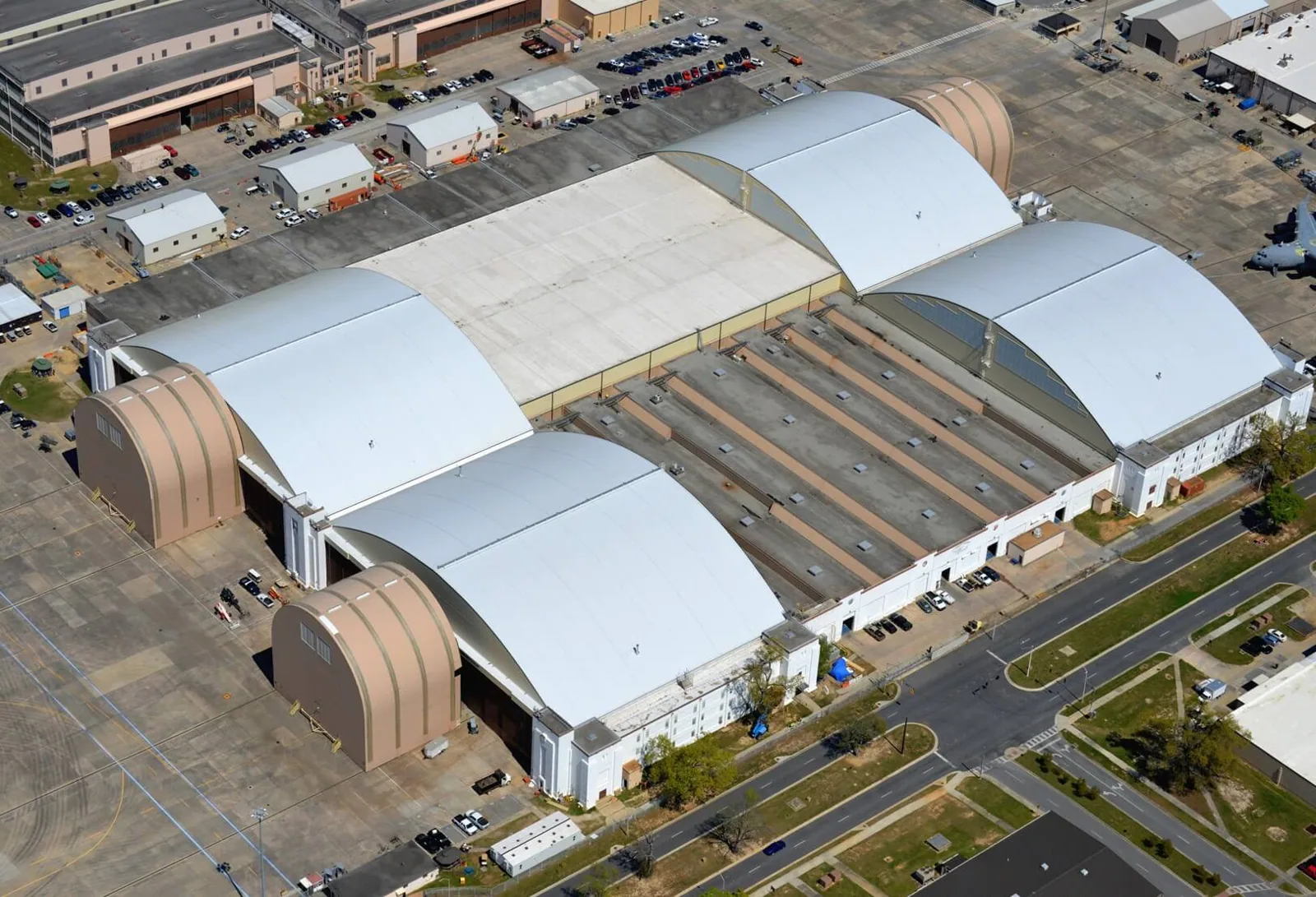
A military maintenance hangar is half cathedral and half machine shop. An aircraft sits on jacks in the high bay for days while the parts room along the wall turns over deliveries, and compressors, cranes and ventilation fans run on a schedule that follows the flying program, not the weather. The roofs above that building are rarely one roof. Near Pasadena, TX, Ellington Field, about 7 miles south-southeast, took on two 46,000 square foot hangars and five control towers in its Second World War construction, Coast Guard Air Station Houston occupied a newer hangar there in May 1987, and the Armed Forces Reserve Center in East Houston was designed with a Field Maintenance Shop.
Roofing for these facilities is a question of how many separate problems one building holds.
Split the Hangar Bay From the Shop Wings Along the Roofline
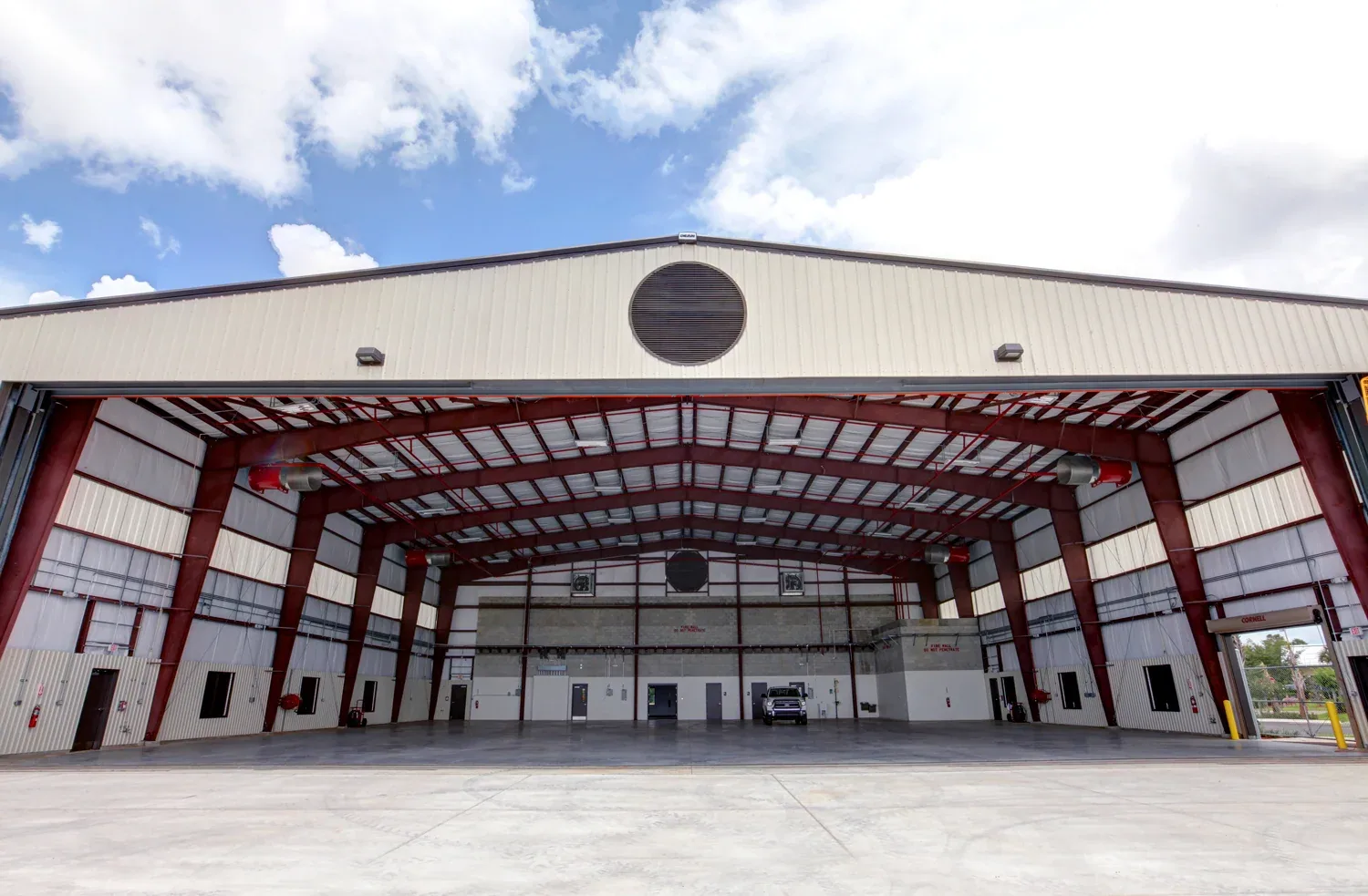
The high bay and the shop wings beside it share a wall but almost nothing else. The bay roof is tall, wide and dominated by door tracks and clear span. The wings are lower, cut by exhaust stacks, make-up air units and roof hatches, and loaded with equipment that gets moved when the shop reorganizes. A leak at the junction between them, where a tall wall meets a lower roof, can run for months before anyone sees a stain.
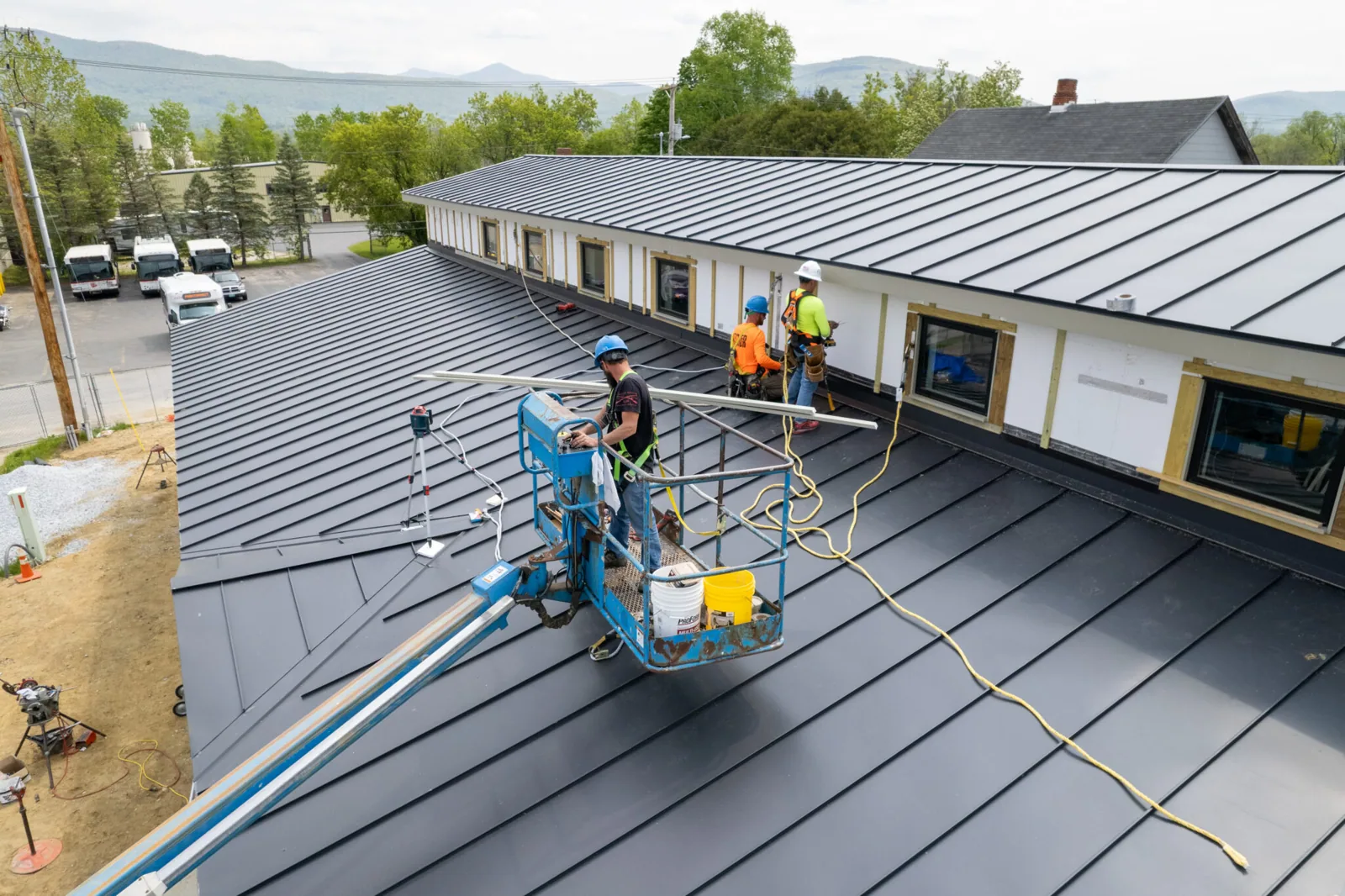
We treat the two as separate scopes with a shared transition detail. The bay may call for a standing seam metal roof or a long-span retrofit, while the wings might use a welded single-ply. The transition between them gets its own flashing, sealed and photographed, because it is where movement and water meet. The doors and the long clear span are the territory of aircraft hangar roofing; the sheds attached to the hangar follow rules of their own, and they are where most of the penetrations and most of the repairs live.
Check What Hangs From the Structure Before Adding Weight to the Roof
Hangar framing does more than hold up a roof. Lighting, fire suppression piping, ventilation ducts and sometimes crane rails hang from the same members, and every added layer of roofing changes what the structure carries. Before a recover is considered, an engineer should look at the framing, especially in older construction, where the original steel and the later additions seldom age together. A hangar kept in service for decades is often modified along the way, and each modification adds something to the roof or hangs something from it.
If the framing has room, roof recover work saves the crew from opening a hangar to the sky. If it does not, a lightweight tear-off in sections, with the bay protected below, is the safer choice. Either way, we weigh the new assembly, record the existing layers and keep a list of every hanging load so the next owner knows what the roof supports.
Pick Membranes That Tolerate Solvent, Exhaust and Fuel Vapor
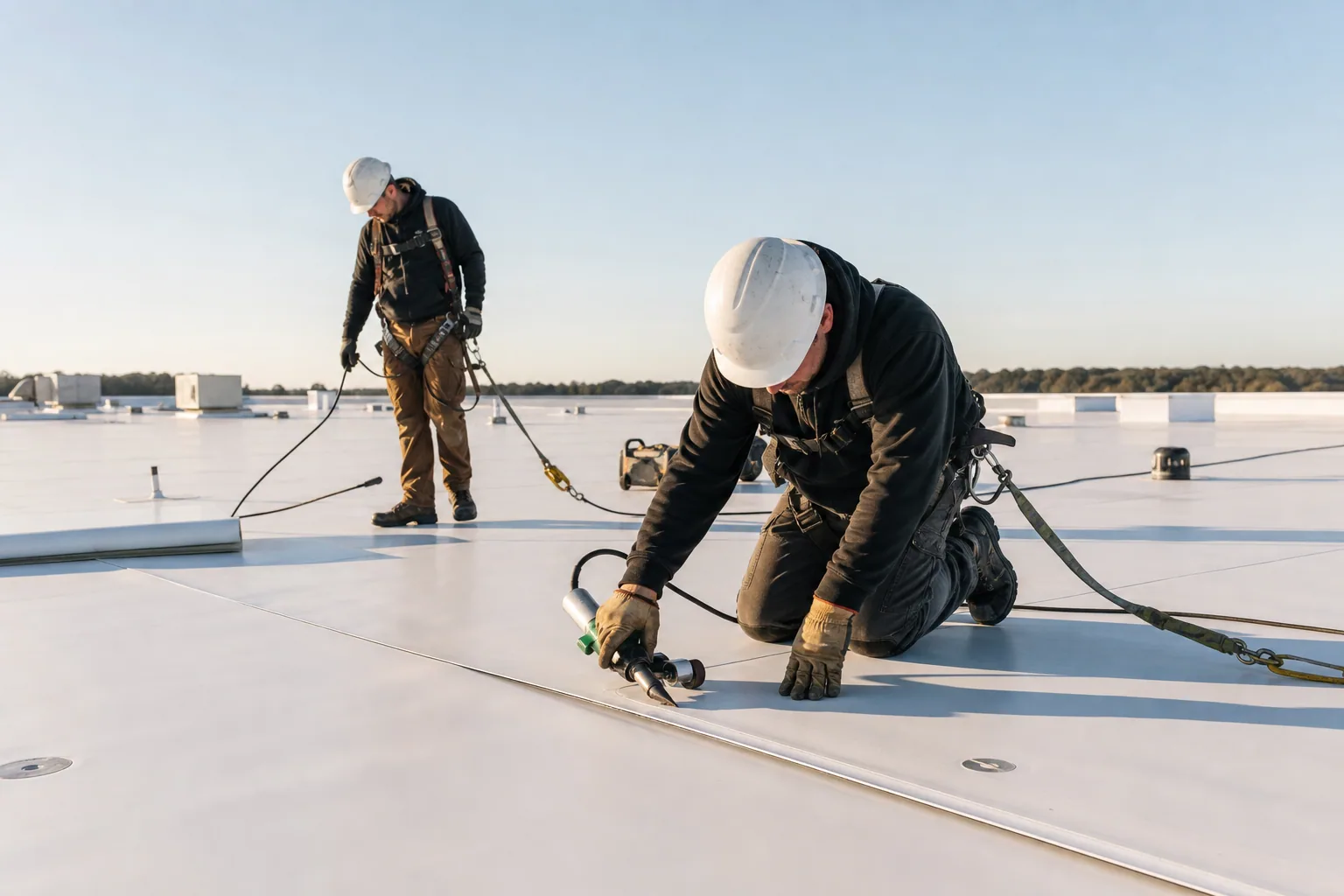
Shop exhaust, wash-down overspray, solvent vapor and the occasional fuel drip are chemical exposure that an office roof never sees. Over years, those residues attack some membranes and leave others untouched. A sheet near a paint booth exhaust or an engine run-up area needs to be chosen for what lands on it, and the choice is a real one, not a formality. PVC roofing is known for its resistance to oils and chemicals, and it welds into a continuous surface that holds up under exhaust.
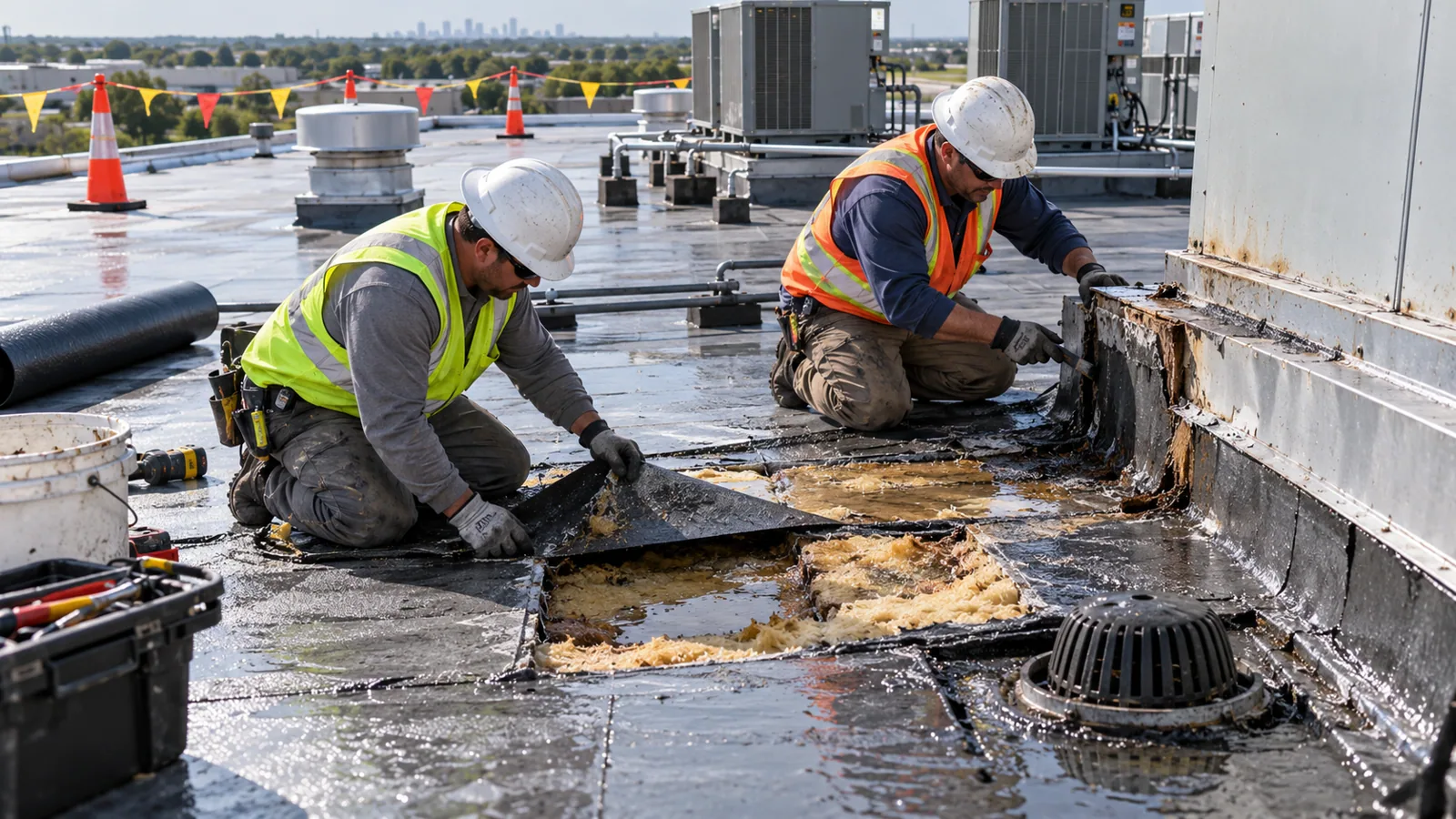
The roof around the stack matters as much as the sheet. We install walkway pads where mechanics step, curb flashings built for heat and a splash zone that can be cleaned. Rooftop equipment on the shop wings gets mapped before work starts, and each unit gets its own detail, since a failed flashing at one fan can drip into a parts room below. Sealed penetrations, tested at the end of every shift, keep that kind of failure from reaching the shelves.
Phase the Work Around Inspection Cycles and Mission Surges
A flying program creates a maintenance rhythm. The 147th Attack Wing flies a round-the-clock mission, NASA keeps T-38 jets at the airfield, and Coast Guard Air Station Houston operates three MH-65E Dolphin helicopters. Each type of aircraft returns to a hangar on its own cycle, and each cycle changes which bays are occupied.
We ask the maintenance control office for the cycle calendar and build the roof sequence on top of it. Sections over an empty bay go first, and sections over a bay with an aircraft in work go when the airframe leaves. The lift plan, the crane pick and the material staging all follow that map. When a surge compresses the schedule, the plan lets the crew close every open section quickly and stand by until the bay calendar clears. The same cycle logic applies at Air Force and Air National Guard mission buildings and at the Coast Guard hangar, where readiness decides the order of work.
Stage the Repair When Wind Opens a Hangar Roof
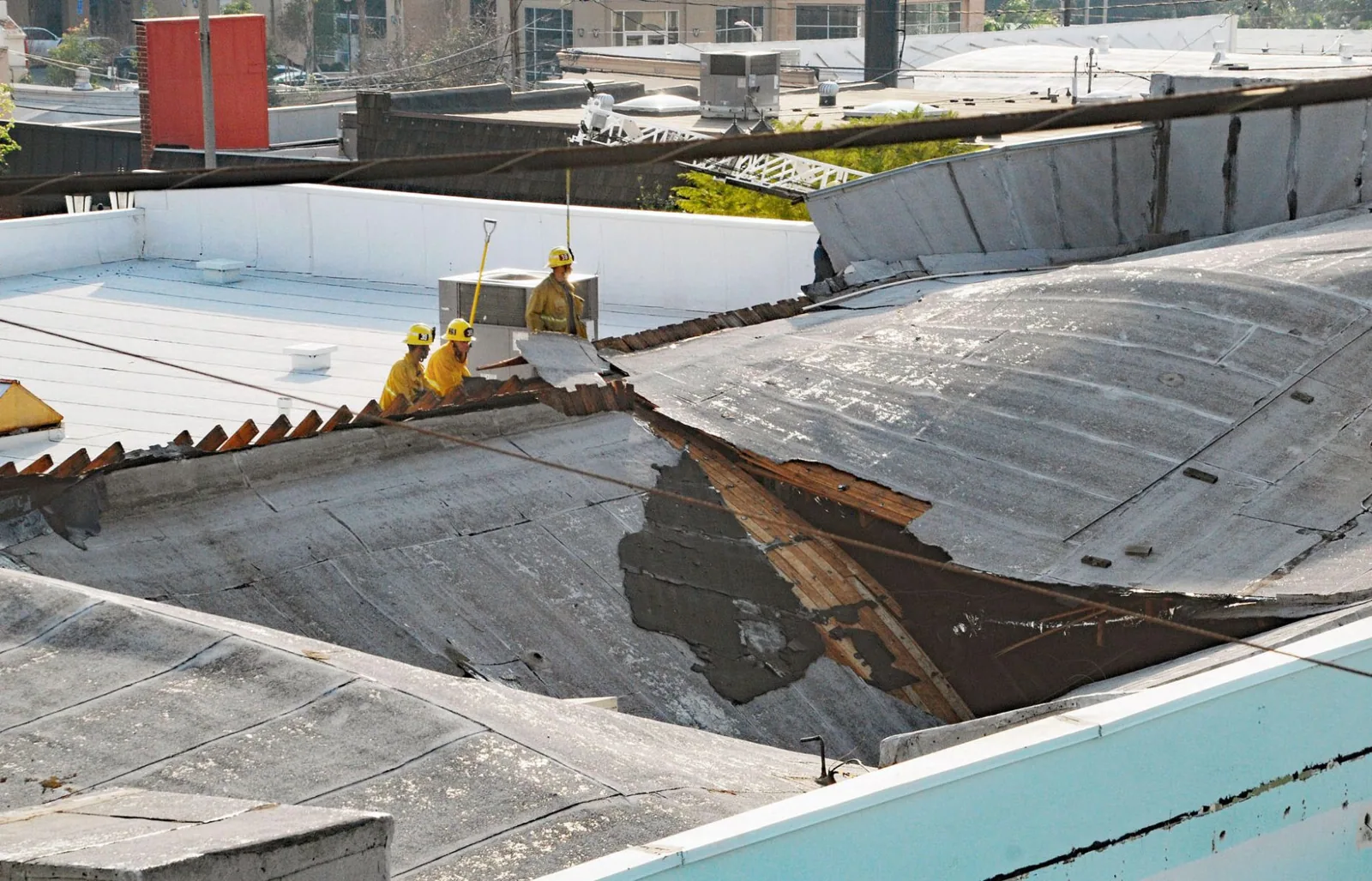
In 2008 Hurricane Ike left the roofs of several hangars used by NASA's T-38 jets at Ellington damaged, a reminder of how wind finds buildings with wide spans and large doors. When it happens, the first priority is a dry-in that protects the aircraft, tooling and electrical gear below. Temporary protection goes on the same day, and the permanent repair follows the damage record rather than the other way around.
The sequence for storm damage roof repair on a hangar is to photograph, tarp or seal, then open only the area being repaired. After that comes a survey of the whole roof, because wind that lifts one edge often loosened others. A commercial roof project in Alvin follows its own owner and access plan, while Ellington hangar work follows the host units’ controls.
A hangar scope should identify the roof areas above aircraft movement, maintenance pits, tool storage, and any mission-critical equipment. Verify overhead attachments and service clearances before adding insulation or modifying supports. Keep solvent, exhaust, and fuel-vapor exposures in view when selecting materials and planning hot work, and confirm the site's controls with the facility operator. The sequence should leave a secure dry-in at each shift end and preserve door operation wherever the schedule allows. At closeout, record the tested seams, repaired penetrations, and access restrictions for future maintenance. That record helps the next crew avoid disturbing a roof detail that was designed around equipment below.
Commercial Roofing Questions
Why split a hangar bay and its shop wings into two roofing scopes?
The bay roof is a wide, high span with door tracks, while the wings are lower and full of equipment. They age differently and fail in different places, so each gets its own survey, its own system and a separate transition detail.
What can hang from a hangar roof structure that a roofer needs to check?
Lighting, fire suppression piping, ventilation ducts and sometimes crane rails or door hardware. Every layer of roofing we add or remove changes the load, so a list of hanging items goes into the plan before any recover is priced.
Will exhaust and solvent vapor shorten the life of a membrane?
They can, when the membrane is not chosen for them. Oils and vapors soften some sheets and leave others alone, so we choose the roof near stacks and run-up areas by what lands on it, and we add walk pads and clean splash zones.
How is roof work scheduled when aircraft arrive for an inspection cycle?
Work follows the bay calendar. Sections over empty bays go first, sections over a bay in use wait for the aircraft to leave, and every open section is closed before an aircraft returns.
What does a temporary repair look like after a storm opens a hangar roof?
A tarped or sealed dry-in placed over the opening, fastened for wind and photographed from several angles. Interior protection goes over the equipment, and the permanent repair is scheduled once the full roof has been surveyed.
Keep Reading
Related Roofing Work in Pasadena
Walk the Bay and the Shop Wings With Us
Bring the maintenance calendar, the building drawings and the access rules. We will walk the facility with your project manager and break the roof into scopes that match how the building actually works.