Roofing Manufacturers
Duro-Last Prefabricated PVC Roofing in Pasadena, TX
One summer. That is what a school district gets between the last bell in May and the first one in August, and a roof crew shares those weeks with the floor crews, the air-conditioning contractors and the painters. Pasadena ISD, the city's largest employer, operates dozens of campuses from Pasadena to South Houston, and any roof work on those campuses has to finish before the buildings fill again. For any Pasadena, TX owner facing that kind of deadline, prefabricated roofing is worth a hard look.
Duro-Last is a custom-fabricated PVC system. The membrane is cut and welded in a factory from measurements taken on the building, then shipped to the roof in panels sized for that structure. Less welding happens in the open air, and more of the work is done before the crane arrives. It is a different workflow from rolling out a sheet in the field, and it deserves a plan built for it.
Measure Once, Because the Factory Cuts Once
Everything in a prefabricated system depends on the measurements. We take the dimensions of the roof field, parapet heights, curb sizes, drain locations, pipe diameters and spacing, and the exact position of every rooftop unit. The numbers go to the factory, where the panels and their prefabricated boots, corners and curb wraps are made to fit.
That is why the measuring day matters more than any other day on the job. A wrong dimension means a panel that does not fit, and a panel built to the wrong size turns into extra field seams and a lost week. We measure twice, verify against drawings where they exist, and walk the roof with the facility director to confirm nothing has been added since the last set of plans was drawn. Rooftop equipment that was installed last year and never drawn is the usual surprise.
Count the Days the Roof Is Open
Prefabrication shortens the time a building is exposed. Panels arrive pre-welded, so the field work is mostly laying them out, attaching them and welding the seams between. A school roof can be torn off and dried in section by section in fewer days than a field-built sheet requires, and that margin is what keeps a summer schedule realistic.
For a district, the work has to fit the calendar from the other end too. Campuses from South Houston High School to those near Beltway 8, where Pasadena ISD growth has been concentrated, share one set of summer weeks. A school district roofing plan lines the campuses up in order, gives each its own window, and staggers the crane so no building waits behind another one. Ordering lead time is part of that plan, so the measuring happens in the spring, not June.
Weld the Field Seams the Factory Could Not
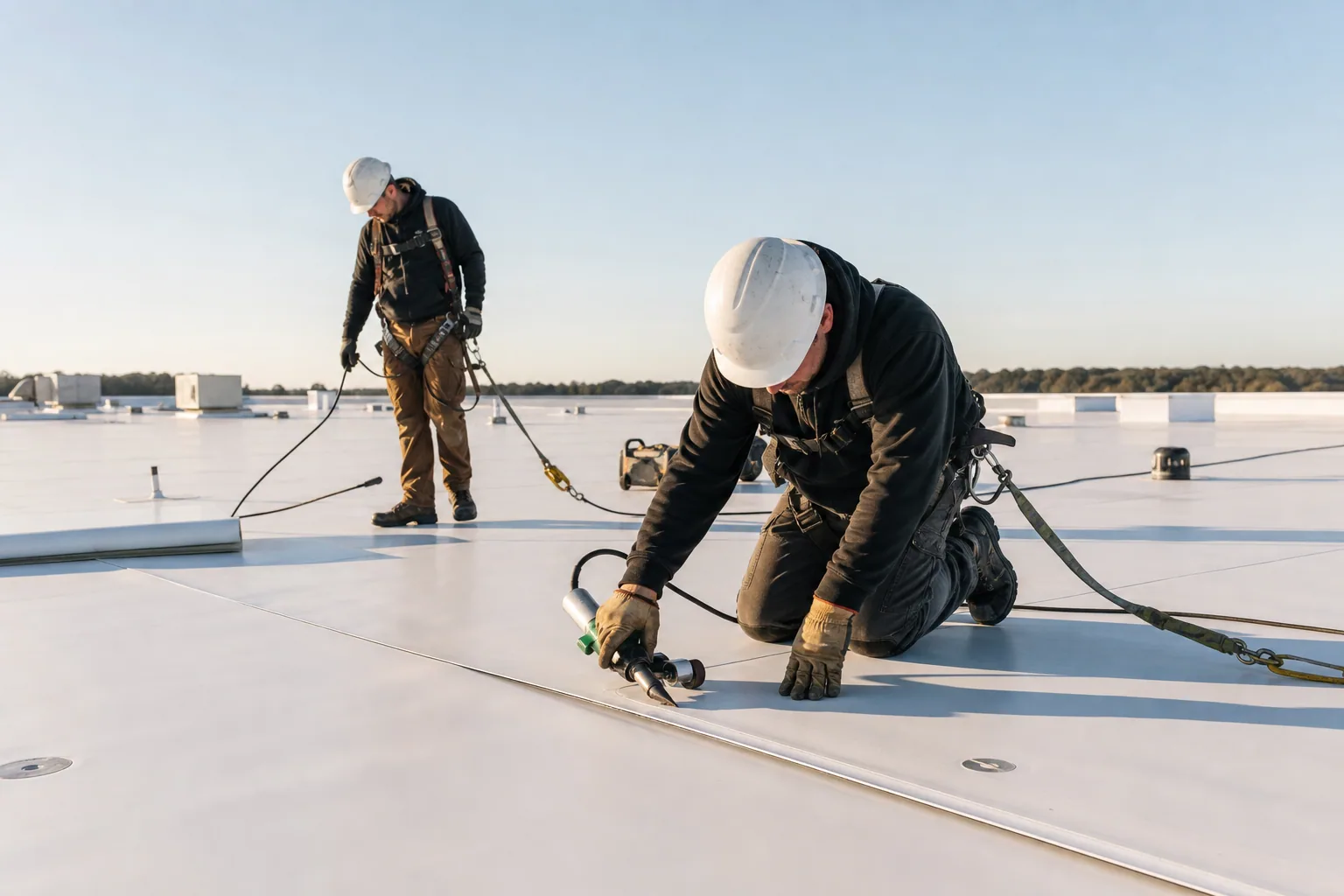
The factory handles most of the welding, but not all of it. Where one panel meets the next, and wherever a boot is fitted around a pipe or curb, the weld happens on the roof. Those field welds are the part of the system most affected by weather and workmanship. The surface has to be clean, dry and free of dust, and the welder has to be set from a test weld made that day.
We probe every field seam along its full length and mark any weld that needs a second pass. PVC roofing depends on those welds being continuous, and a sealant bead on top of a poor weld only hides the flaw until the next hard rain. The probe is the check we trust.
Fasten Through the Insulation Into a Sound Deck
Most Duro-Last roofs are mechanically attached, with fasteners and plates at the panel edges that pass through the insulation into the deck. That makes the deck's condition critical. A rusted steel deck, a delaminated plywood deck or a split in the concrete topping can leave a fastener with nothing to hold. Before fastening begins we test samples across the roof, replace any section that fails, and set the pattern to the building's wind exposure.
Wind exposure here is not abstract. Hurricane Beryl put the east side of its eyewall over the Houston area in July 2024, and the January 2023 tornado cut an 18-mile path across Pasadena and Deer Park, causing roof damage at Pasadena Memorial High School. Perimeter and corner zones get the densest fastening, and edge metal gets a continuous cleat. East of State Highway 146 the attachment schedule has to meet the state's windstorm inspection, and we write it down before panels are ordered.
Repair a Puncture With a Weld, Not a Bead of Caulk
When a prefabricated roof is hit by a dropped tool, a falling branch or a technician's boot, the repair should look like the original. The fix starts with a cleaned surface and a patch of matching PVC with rounded corners, welded down by hot air and then probed along its edge. A membrane puncture repair done that way restores the roof; one done with sealant buys a few weeks.
The panels and boots are made to order, so the file we keep matters. Part numbers, panel layouts and field measurements let us order a matching piece years later when a curb is added or a wall is changed. That record sits beside the other roof files and feeds a roof condition report the next time the owner reviews the building.
Factory-cut sheets reduce some field seams, but perimeter conditions and later rooftop changes still need close review. Check that the measured layout accounts for curbs, walls, drains, and equipment planned after installation. During placement, protect prefabricated panels from puncture and confirm the field welds at transitions with the specified test method. If another trade adds a curb or conduit later, document who approved the opening and how the membrane will be restored. The handover should include panel or layout records, repair materials, and the procedure for reporting damage. That information helps the owner maintain the system without relying on assumptions about concealed details.
Commercial Roofing Questions
How long does it take from measuring to a finished roof on a school?
The lead time between measuring and delivery is the part owners forget. Panels have to be fabricated and shipped, so measuring in spring protects a summer schedule. Once the panels are here, the on-site work moves quickly. We build the calendar backward from the first day of classes and show the district each step.
Our rooftop equipment changed after the last drawings. Does that matter for a prefabricated roof?
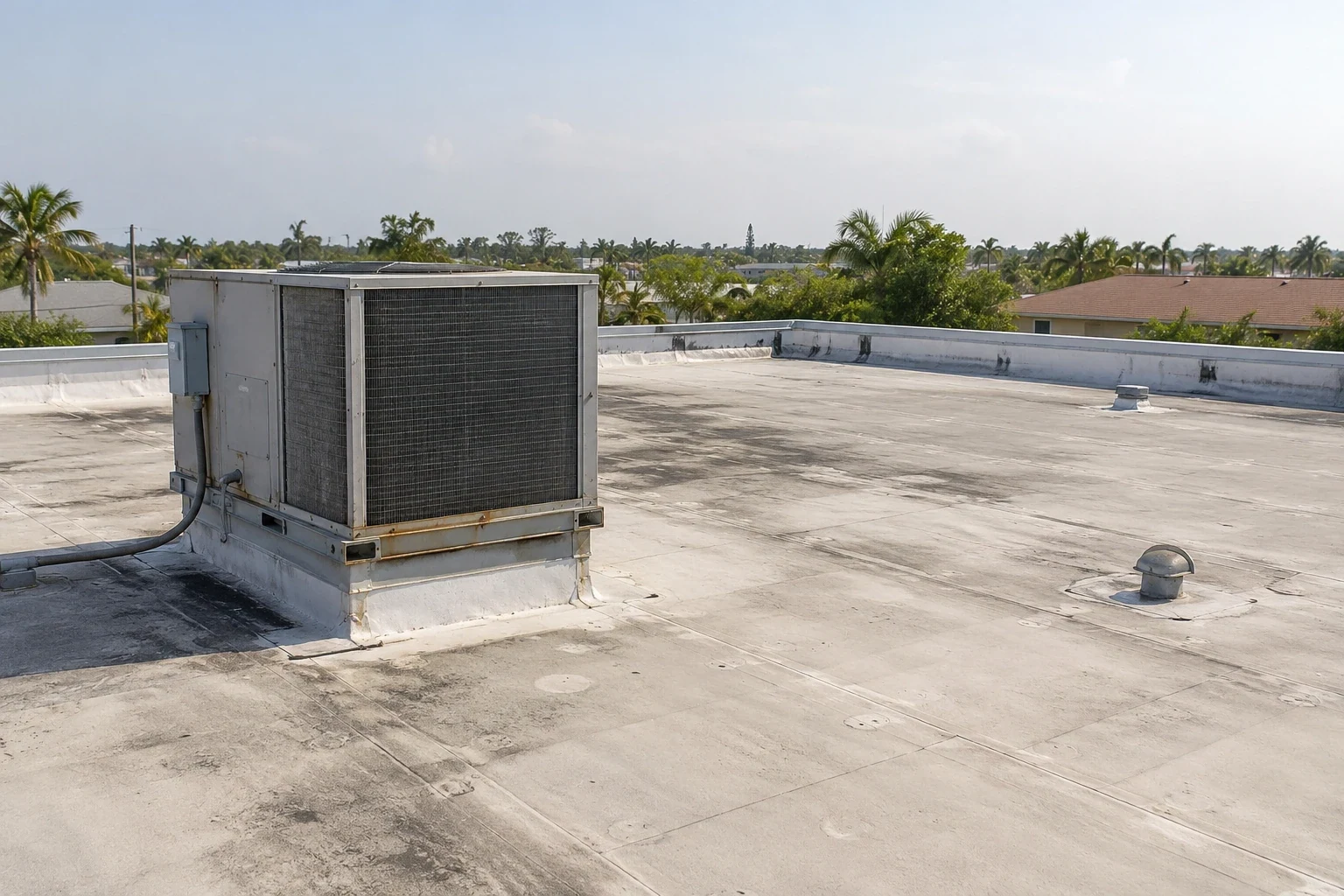
It matters a great deal. A unit that has moved, grown or been replaced throws off the curb wrap, and a boot made for the old pipe size will not fit the new one. We measure the roof as it is today, not as the drawings say it was, and photograph every detail so the factory has it right.
Can a Duro-Last roof go over an old built-up roof?
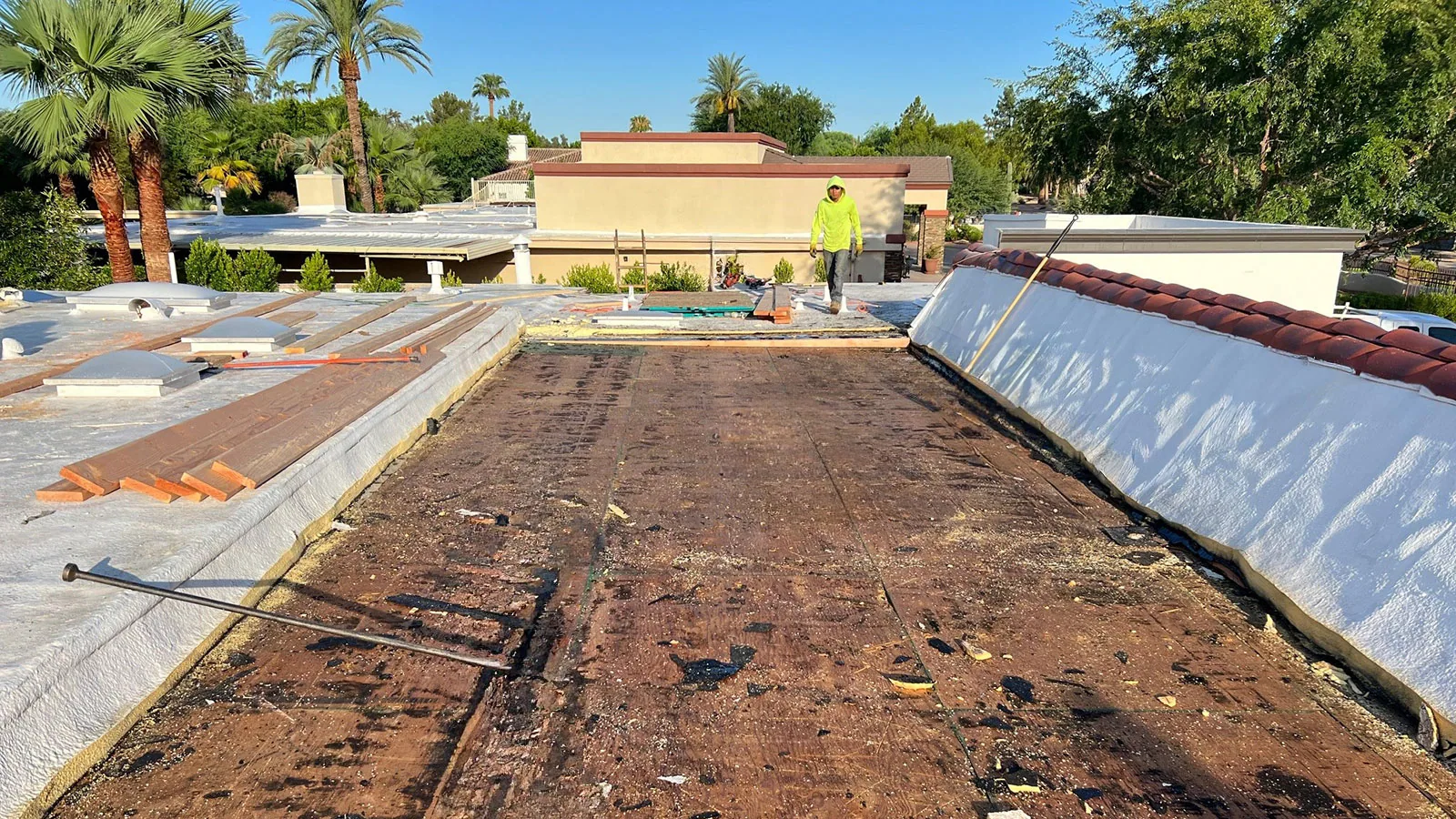
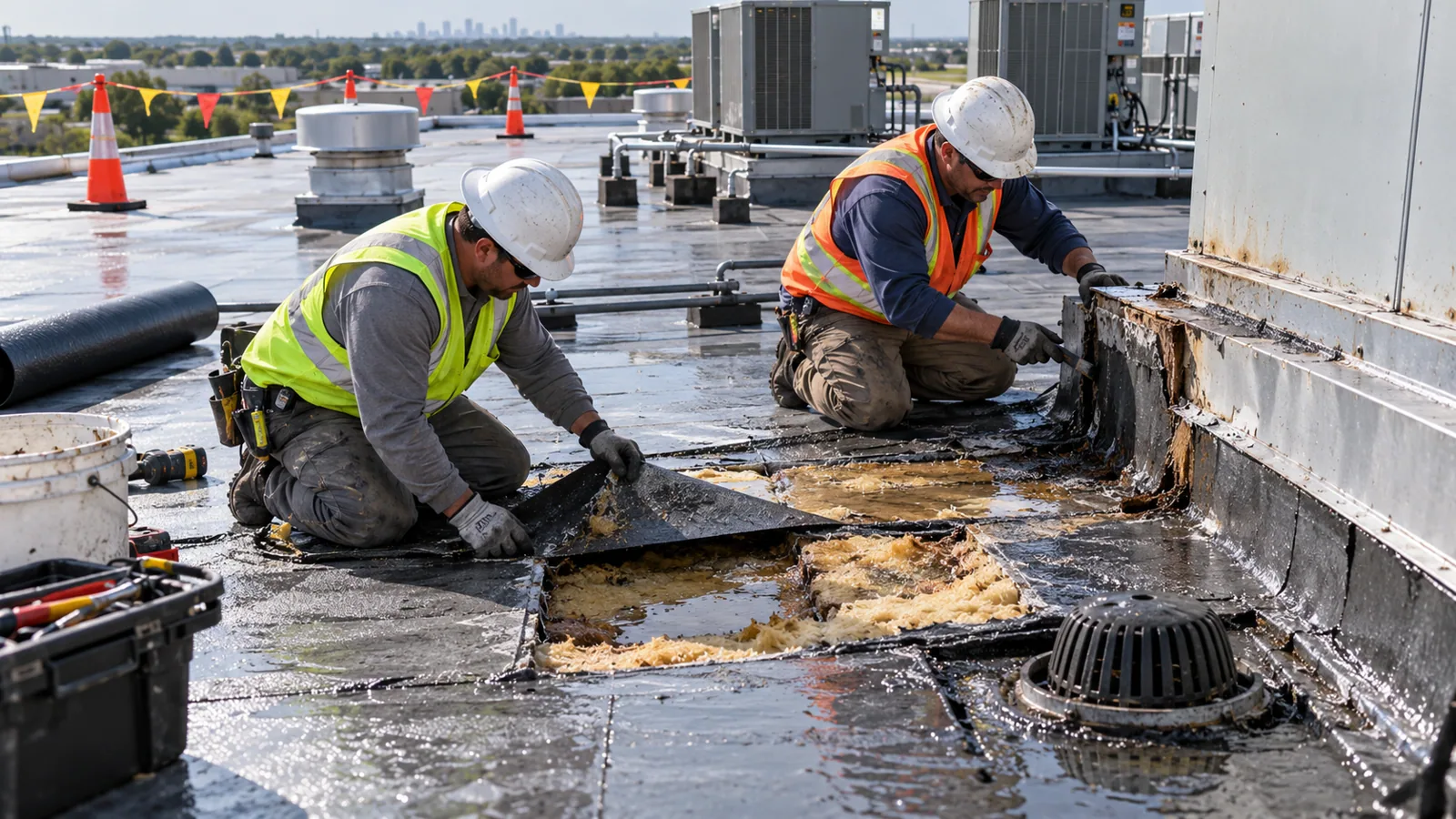
Sometimes. When core samples show dry insulation and the structure and local code allow one more layer, a roof recover is possible, with a cover board or separation layer on top of the old roof. If moisture is found, those sections come out first. A tear-off is the better choice when the old deck has corroded or the insulation is wet.
How does this compare with PVC from Sika Sarnafil or Holcim Elevate?
All three are PVC, with welded seams and good chemical resistance. The difference is workflow. Sika Sarnafil and Holcim Elevate sheets are rolled out and welded in the field, while Duro-Last panels arrive pre-fabricated to fit. The building, the schedule and the number of penetrations point to the better match.
What should a school facilities team check on a PVC roof each spring?
Drains and scuppers, walk pad routes, seams near rooftop equipment and every flashing at a wall. Look for pooling water, scuffed membrane, loose terminations and signs of grease or chemical fallout from nearby vents. A short written checklist helps; so does a photo from the same spot each year, which shows slow changes that memory misses.
Keep Reading
Related Roofing Work in Pasadena
Measure the Roof With Us Before the Calendar Fills
Bring the campus plans, the summer window and any equipment changes. We will measure with your facility director and build a Duro-Last schedule that finishes before the buildings fill again.