Service Areas
Commercial Roofing in Mont Belvieu, TX
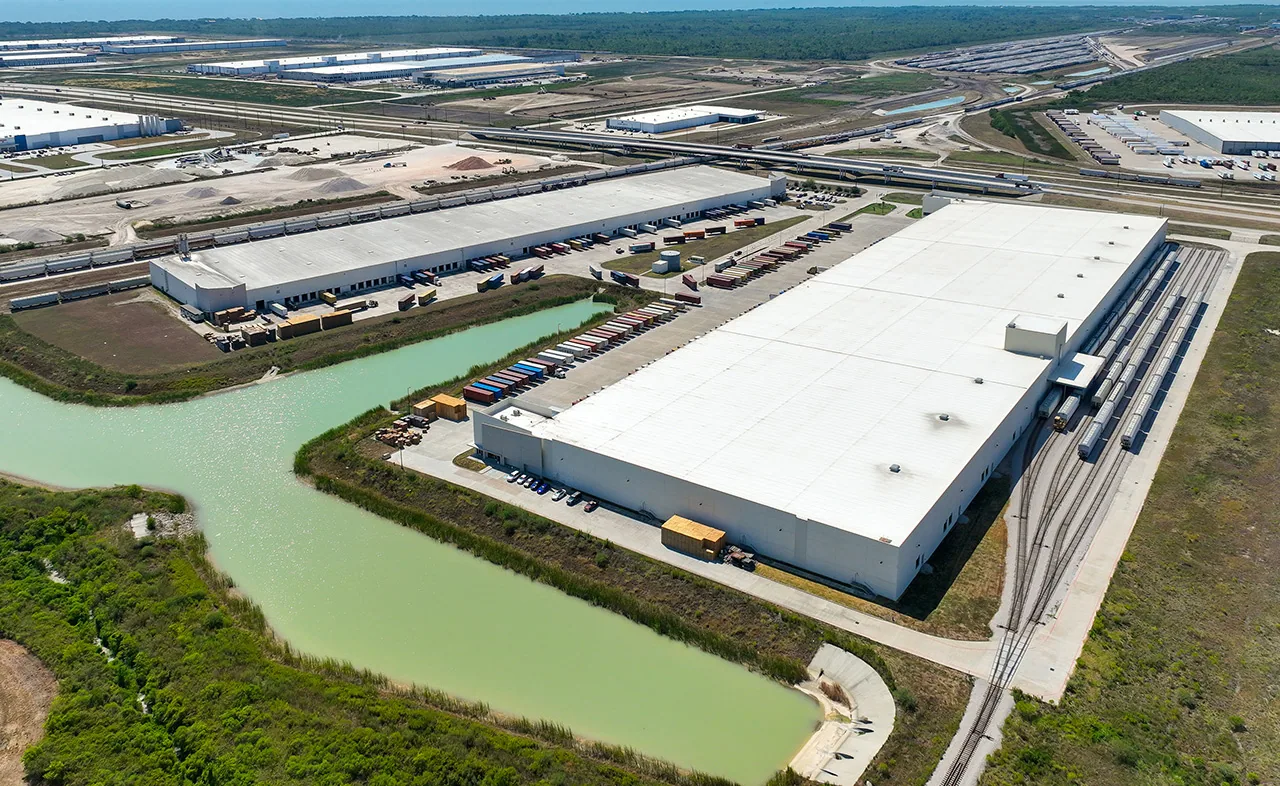
A town at the crossing of hundreds of oil and natural gas pipelines runs on uptime, and a roof over any building tied to that work cannot be the reason a shift stops. Mont Belvieu, TX sits about 31 miles east of Houston via I-10 and holds the largest underground liquefied petroleum gas storage facility in the US. Industrial tax revenue funds the city, which had 7,654 residents in 2020, and roof decisions for industrial owners here are made in terms of operations, permits and downtime.
Low-slope and metal roofs over industrial and storage buildings are the work. Where hydrocarbons are handled, the plan starts with what is allowed on the site: open flame, equipment, deliveries and workers. Sequence follows, with a crane pick, a laydown area and sections small enough to close up every night.
Decide Torch or No Torch Before Pricing the System
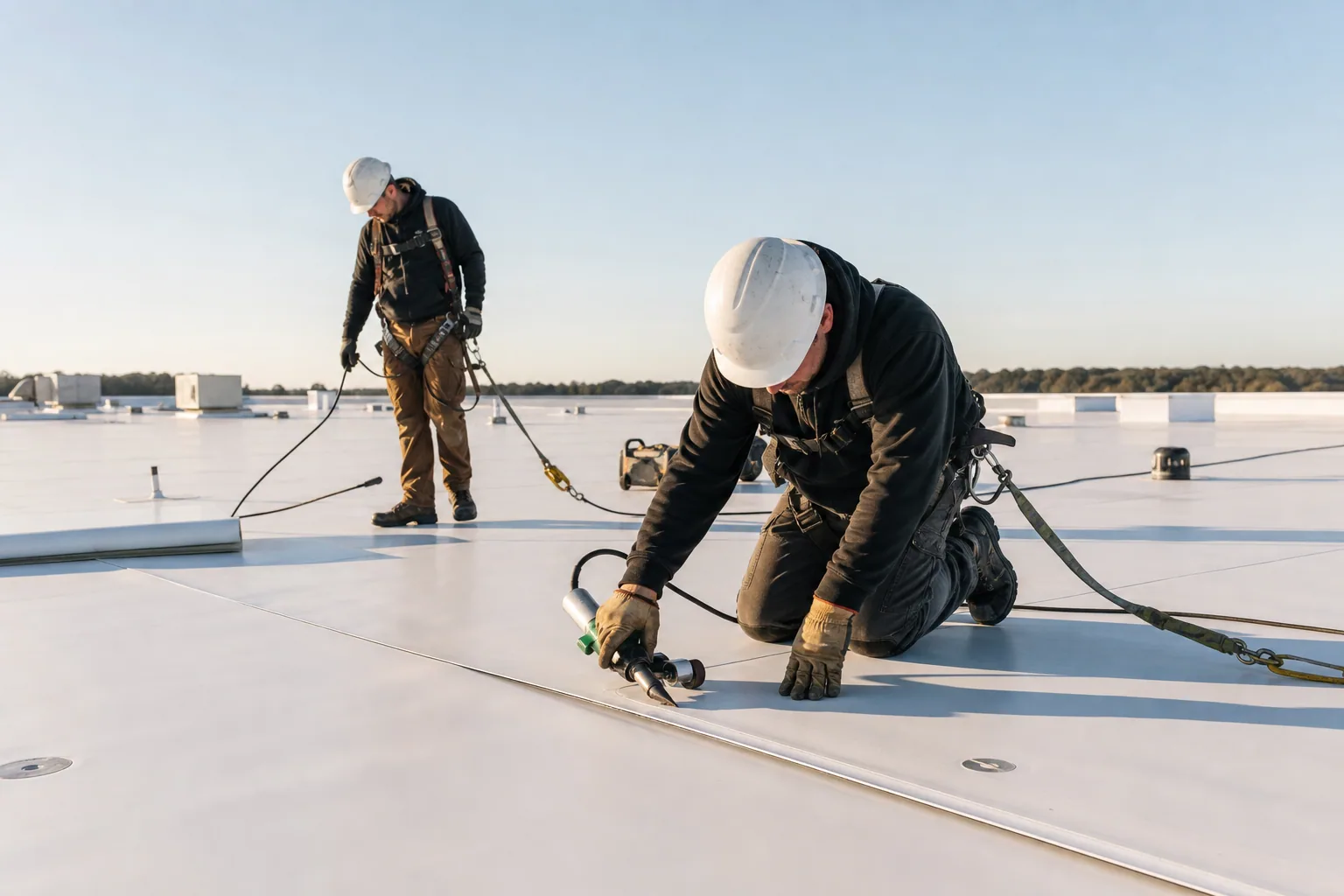
On a site that stores or moves flammable product, the first roofing question is what heat the owner will permit. A torch-applied membrane needs a hot work permit, a fire watch and, at many sites, gas monitoring before the flame lights. Even a hot-air welder or a heat gun can count as hot work. We ask for the permit rules before we price a system, because the answer can rule out some choices and favor others.
Cold-applied adhesives, mechanically attached sheets and some fully adhered single-ply systems avoid open flame completely. When welded seams are the best choice for the roof, we schedule the work inside the permit window and place the fire watch where the permit says. A written scope for commercial roof replacement lists the heat sources, the permits and the people who sign them, so nobody learns about a restriction on the morning of the job.
Match the Membrane to Oil, Exhaust and Residue
A roof near vents, exhaust stacks or oil-bearing residue needs a membrane that tolerates what lands on it. Some single-ply sheets soften or craze when exposed to oils and fats, while others are made to resist them. KEE roofing, which is built on a ketone ethylene ester that resists oils, and PVC formulations with similar resistance are the systems owners consider for that kind of exposure. PVC roofing also gives welded seams that hold up under foot traffic around service equipment.
We look at the surface on the first walk to see what has collected there, check the drains for residue and note where run-off from equipment lands. If the existing membrane shows swelling or staining, we say so, and the options include repair, recover or replacement based on how far the damage has traveled into the insulation.
Schedule Badging, Orientation and Haul Time Together
Before a crew climbs onto a roof on an industrial site, every worker goes through a site safety orientation, and many sites require badging that takes days to issue. We ask for the lead times at the start and build the schedule backward from them, so no one waits at a gate with a truck behind them. The haul adds its own clock. Material and crews arrive over I-10, and a late delivery that misses the crane's booked hours costs a day.
Shutdown windows set the pace for roofs tied to process equipment. A window that moves two weeks can still be met if material is held as a flexible order and the roof is cut into sections that close daily. The same checklist applies to plants in the Bayport Industrial District or Baytown, and a manufacturing plant roof is phased with it in hand.
Watch for Corrosion and Standing Water on Every Walk
Summer air in the Houston area stays wet, with morning humidity above 90 percent, an average August high near 95 F, some 102 days a year of 90 F or hotter, and about 50 inches of rain each year. A metal roof or a pipe rack frame in that air loses its coating at fasteners, laps and cut edges, and rust spreads into the insulation. Standing water adds weight and starts seam failure.
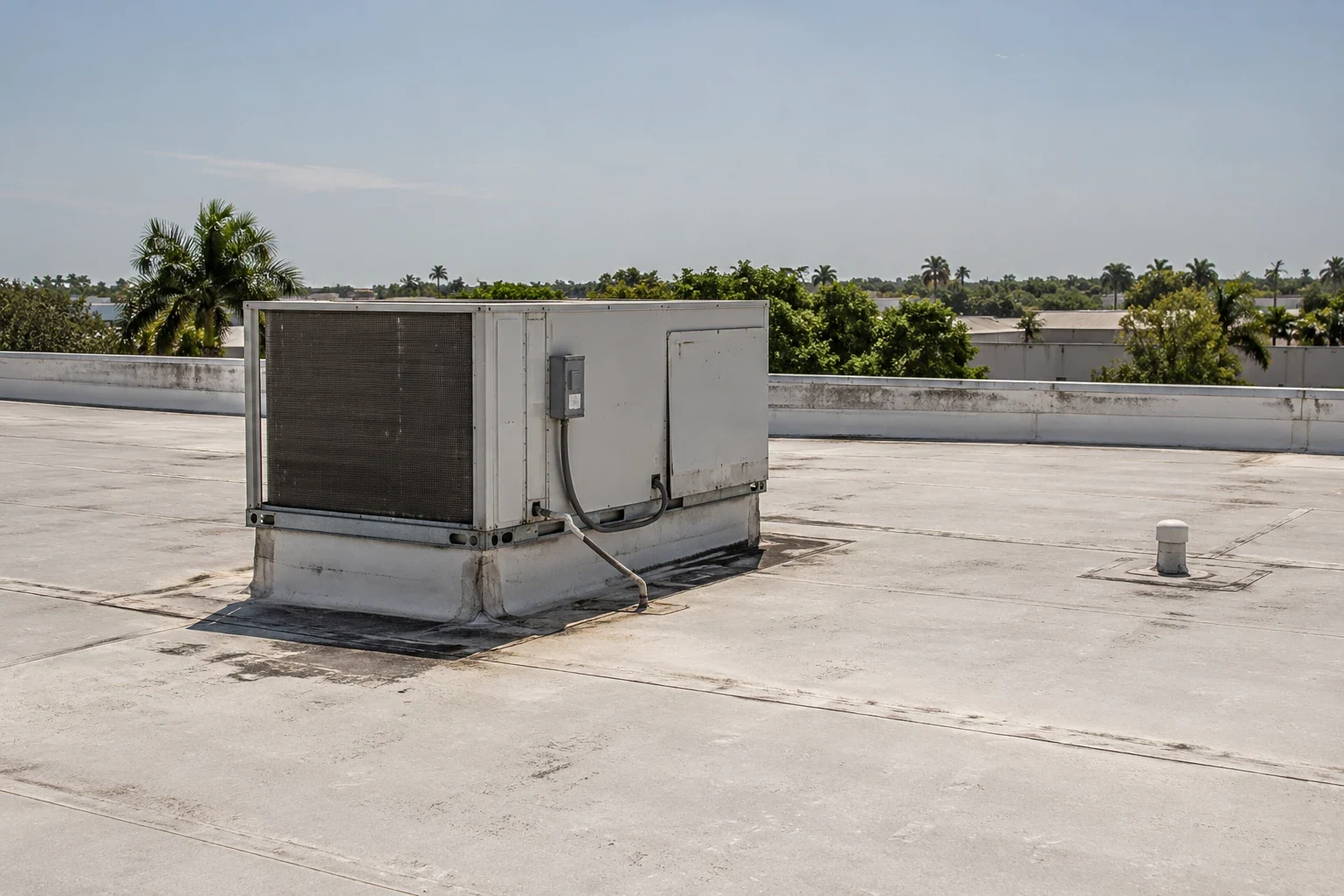
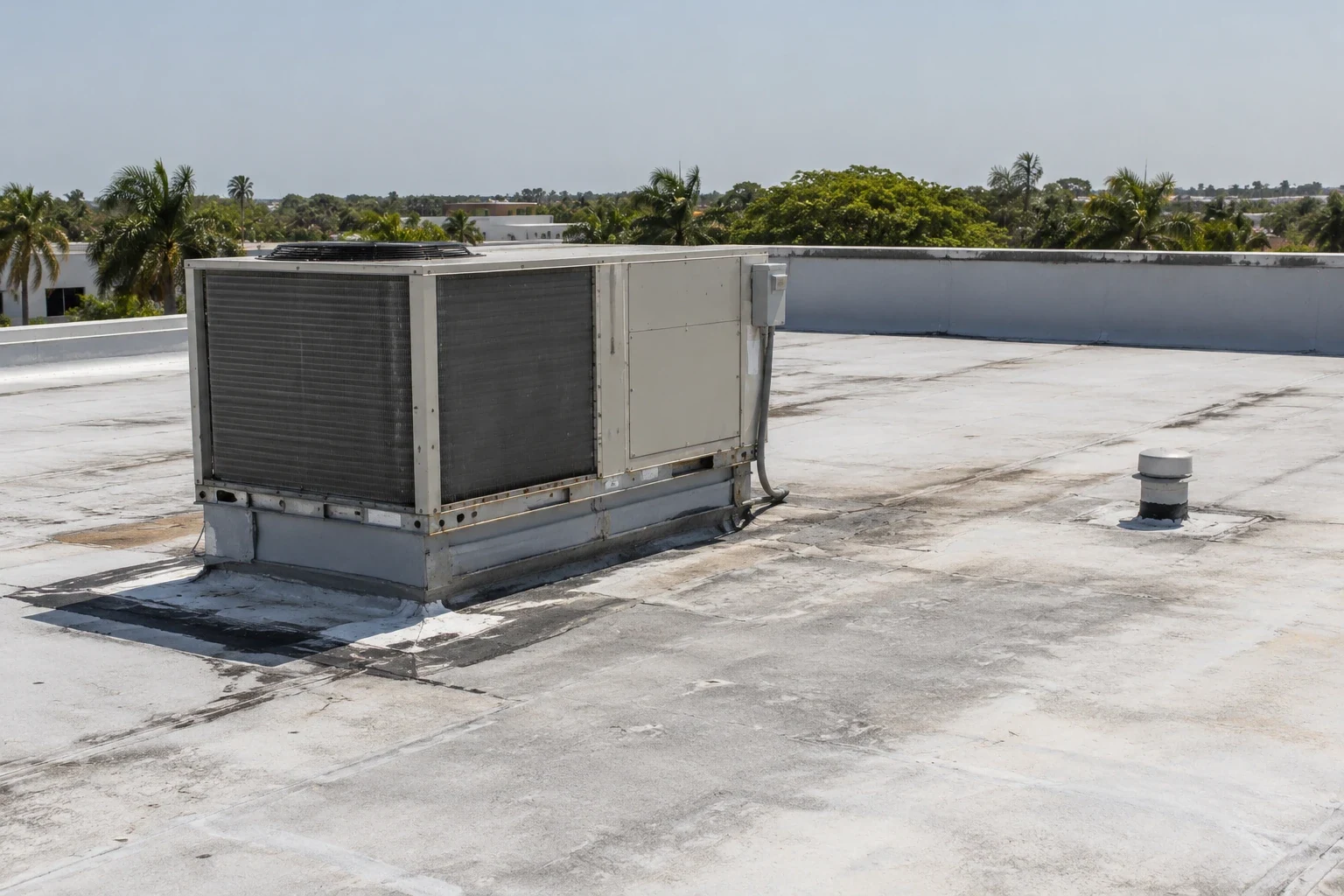
Our preventive maintenance visits tighten fasteners, reseal penetrations, clear drains and touch up coatings before the wet season. They also record what the roof looks like with dated photographs, so the next walk compares conditions against a record. For equipment mounted on the roof, rooftop equipment curbs and supports get their own line in the report, since a rusted curb leaks long before the field sheet does.
Keep a Condition Record for the Next Gulf Storm
In January 2023 an EF3 tornado with winds near 140 mph cut through Pasadena, TX and Deer Park, and the derecho of May 2024 blew across Greater Houston. Harvey in August 2017 took about 12 percent of U.S. refining capacity offline along the Gulf Coast. Those events show how fast a storm can take a plant out of service. A roof record gives an owner a head start on tornado damage roof repair and any claim that follows.
The record is simple. Dated photographs of every drain, curb, seam and termination, a roof plan with those positions marked, and a short log of past repairs. After a storm, the same walk produces a comparison an adjuster can read, and temporary dry-in goes over any opening before the next rain. Owners then decide whether the permanent fix is a repair, a recover or a replacement, with the shutdown calendar in view.
A Mont Belvieu facility may require coordination among roof maintenance, process operations, safety, and contractors working on equipment above the membrane. Confirm who authorizes permits, escorts, shutdowns, and hot work before materials are delivered. Inspect the roof for residue, exhaust exposure, standing water, and corrosion, recording each condition by zone. For torch-applied work, verify the approved fire controls and nearby hazards; where that method is unsuitable, compare compatible alternatives with the owner. The closeout should state what was installed, which areas remain under observation, and who should be contacted before future penetrations. This keeps roof decisions tied to site procedures and documented conditions.
Commercial Roofing Questions
Can a roof be installed without open flame on a site that handles hydrocarbons?
Cold-applied, adhered and mechanically attached systems all avoid a torch, and a hot-air welder is sometimes allowed under permit. We choose the method after reading the site rules, then confirm the permit before material is ordered.
What does a site safety orientation add to the schedule?
Time before the first fastener goes in. Each worker attends the orientation, badging may take days to arrive, and gas monitors or escorts can be required on the roof. We ask for those lead times first and put them on the calendar next to the crane booking.
Which membranes tolerate oil and chemical residue on the surface?
KEE and PVC formulations are made to resist oils and fats, while some other single-ply sheets soften or craze under the same exposure. A first walk shows what has collected on the roof and where it drains, which narrows the field.
How are repairs planned for a roof over equipment that cannot be shut down?
Around the equipment, not through it. The work is divided into small areas, penetrations over live units are flashed in phases, and any outage is set with the operations team in advance. A temporary dry-in protects the unit if rain arrives before the repair is finished.
Does a control building need a different roof plan than a warehouse?
Contents drive the risk tolerance. A control room holds electronics and people who cannot leave, so the roof opens in smaller sections with tighter weather protection and a night shift where permitted. A storage building can usually accept a larger open area for a shorter time.
Keep Reading
Related Roofing Work in Pasadena
Walk the Site and the Permit Rules With Us
Tell us what the site allows, when the next shutdown window opens and which buildings cannot stop. We will walk the roof with you, so the work plan fits your operation from day one.